Areas We Serve · Kalispell, Montana
Meadowlark Log Homes delivers log home maintenance across Kalispell, where freeze-thaw cycles and year-round precipitation accelerate checking and moisture intrusion. We map moisture content, repair chinking, and reapply UV-resistant finishes using Sashco and Perma-Chink systems, backed by documented field experience and transparent photo reports.

Most log owners wait until spring to inspect, but the real window is late fall. By then, summer UV has bleached finishes, and you can catch chinking tears before snowmelt drives water behind the sealant joints. We schedule pre-winter walkthroughs in October and November.
Schedule the inspection before the first hard freeze. You'll catch finish failures while contractors still have open calendars, and you won't spend January wondering whether that chinking gap is letting meltwater into your wall cavity.
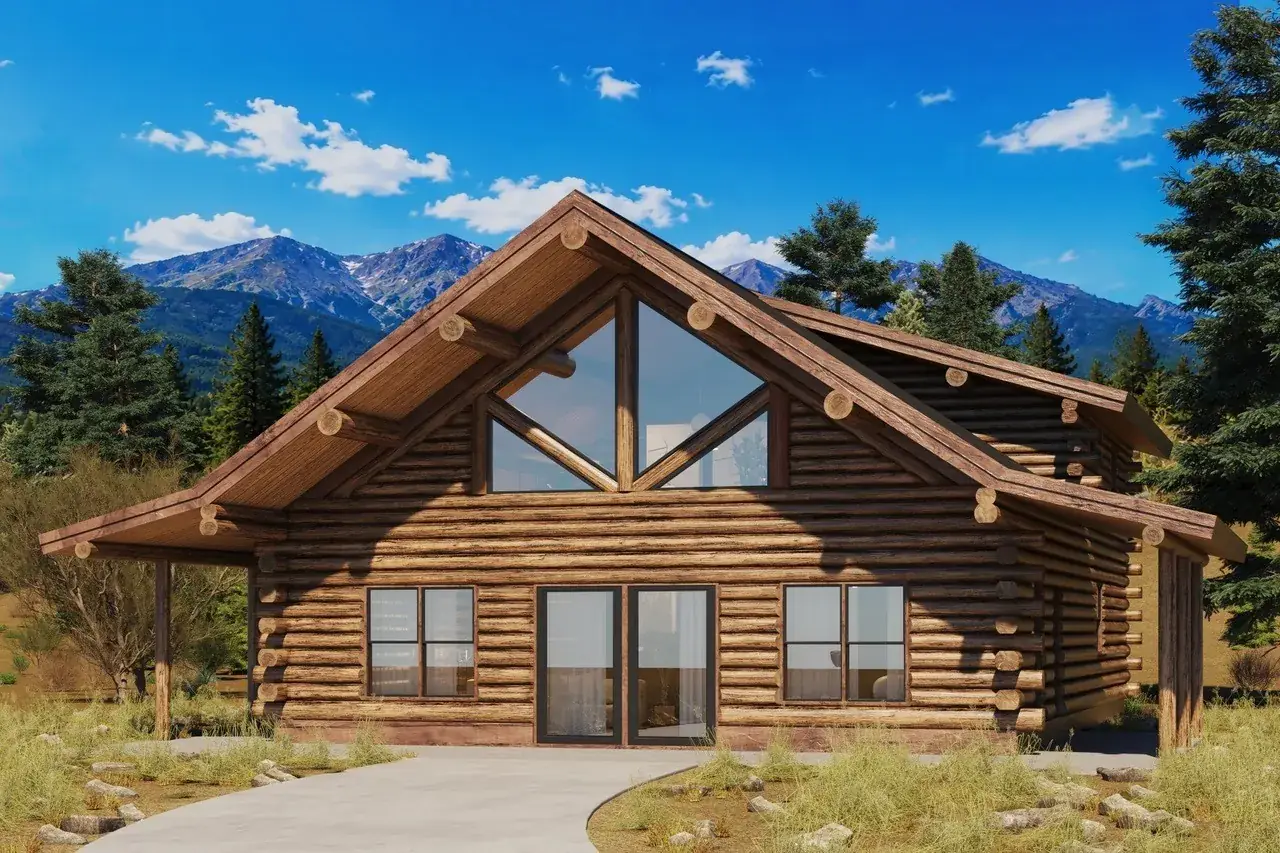
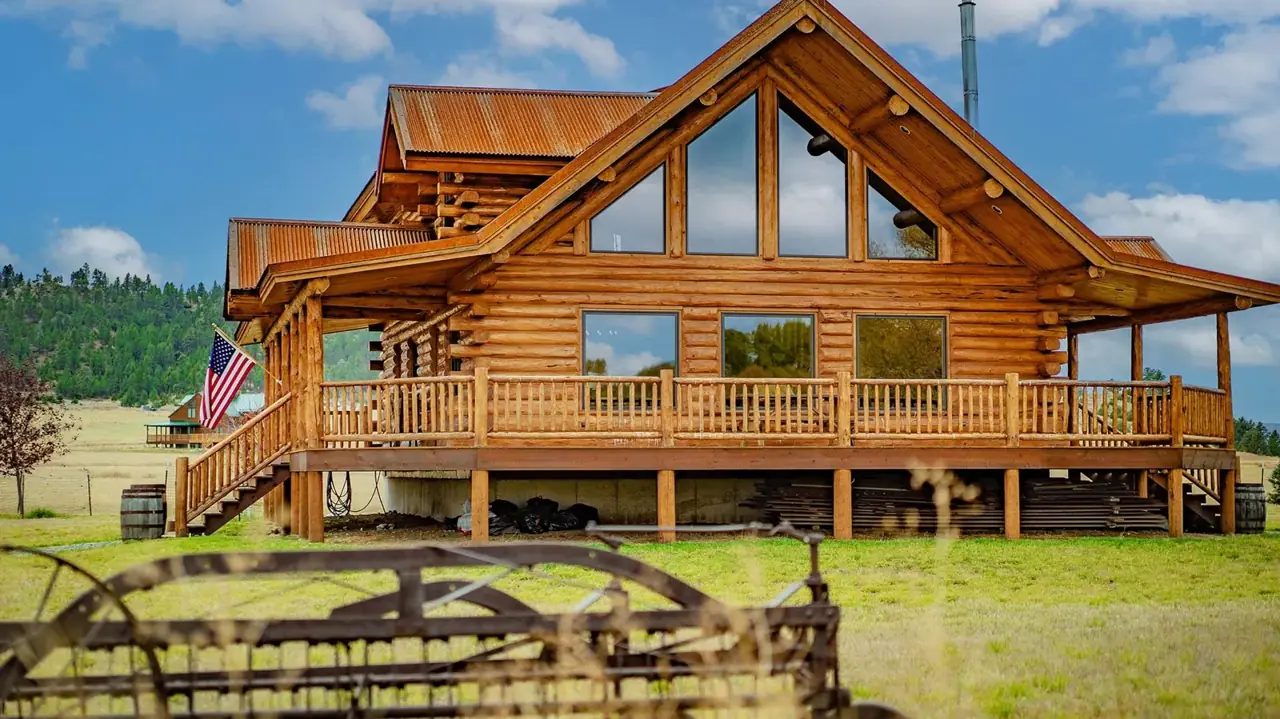
Browse every Meadowlark model, compare log package pricing, square footage and bedrooms, then open any floor plan to see photos, drawings and package details for your Kalispell area build.

You open the front door in March and smell must. That's the moment most clients call. The honest answer is that the need showed up six months earlier: graying wood, chinking gaps, or finish that beads water poorly, but those signs are easy to ignore until moisture moves inside.
For Cody Crone, we caught a subtle chinking failure at a porch-to-wall intersection; no visible water damage yet, but the meter spiked to twenty-four percent. We've also had clients refuse borate treatment because they didn't see beetles, only to call back six months later when carpenter ants colonized the damp sill logs.
“Amazing quality and customer service from this multi-generational family of craftsmen.”
Becky Umphrey

Log homes aren't static. Wood checks as it dries, sealant joints move with temperature swings, and UV degrades even the best topcoats. The work is ongoing, not a one-time fix.
Roof valleys, chimneys, and plumbing vents are the highest-risk water-entry points. We re-flash these intersections with butyl membranes, verify kick-out flashing directs runoff away from log walls, and seal any gaps with ASTM C920 elastomeric sealants.
Acrylic chinking compounds like Energy Seal and Log Jam must accommodate 25% to 50% movement. We install closed-cell backer rod to maintain a one-to-two depth-to-width ratio, ensuring the joint can expand and contract without tearing or losing adhesion.
Penetrating stains from Sansin or PPG ProLuxe offer better UV resistance than film-forming finishes in high-altitude sun. We verify wet mils during application and back-brush to ensure full penetration, then apply a clear topcoat on south and west elevations where UV exposure is most intense.
Disodium octaborate tetrahydrate prevents rot and insect colonization in high-moisture zones. We apply Bora-Care or Tim-bor to log ends, sill logs, and any area where moisture content exceeds nineteen percent, following label rates and ensuring the substrate is dry enough to absorb it.

Gutter cleaning and end-grain sealing prevent more rot than any finish system. Most log owners focus on visible surfaces and ignore the details that actually control moisture: downspout extensions, grade slope away from the foundation, and whether splash-back is hitting the bottom course of logs.
When Blake Lawrence's remote cabin needed maintenance, we found that the previous contractor had skipped end-grain sealing entirely; every log end was wicking moisture, and two sill logs showed early rot. We also tell clients that if they defer gutter work, no amount of finish will prevent splashback damage, and we've walked away from jobs where the client insisted on stain-only fixes without addressing drainage.
“Ben has been such a pleasure to work with. He is very thorough, professional, and always willing to answer my questions.”
Arlene Mulvaney
Meadowlark Log Homes serves residents throughout Kalispell and the surrounding Flathead Valley. Our team regularly works in Whitefish, Columbia Falls, and Bigfork, where log homes face similar freeze-thaw and UV exposure. Scheduling is flexible, and we coordinate pre-winter inspections around weather windows to ensure finishes cure properly before the first snow.
We plan routes to minimize travel time between Kalispell, Whitefish, and Columbia Falls, so clients in those corridors often share the same inspection week. Properties at higher elevations near Glacier require earlier fall scheduling because snow arrives sooner and finishes need longer cure windows before temperatures drop.
Exposure, shade and access vary across the valley, and those conditions shape what a maintenance visit focuses on.
| Location & Neighborhoods | ZIP Codes | Local Landmarks & Housing Styles | Typical Build Considerations | How we focus the visit |
|---|---|---|---|---|
| Kalispell neighborhoodsDowntown, Lone Pine, Spring Prairie, West Valley | 59901, 59903, 59904 | Conrad Mansion, Lone Pine State Park and Main Street. Valley-floor ranch homes, subdivisions and acreage. | Established log homes on open valley lots.Details to share: The age of the home and when it was last stained or sealed. | We review finish condition on the sunniest walls first. |
| Whitefish and wooded hillsidesWhitefish Lake, Big Mountain Road, Haskill Basin | 59937 | Whitefish Lake and Whitefish Mountain Resort. Wooded hillside cabins and mountain-view homes. | Shaded, forested lots with heavy snow.Details to share: Areas that stay damp, roof valleys and any musty smells inside. | We pay close attention to moisture at roof transitions and log ends. |
| Columbia Falls and rural acreageColumbia Falls, Coram, Hungry Horse, Martin City | 59912, 59913, 59919, 59926 | Flathead River and the Highway 2 route to West Glacier. Rural acreage and recreation cabins. | Open sites with full sun and wind exposure.Details to share: Which walls face south and west and any visible fading. | We prioritize finish refresh on the most exposed elevations. |
| Bigfork and Flathead Lake east shoreBigfork Village, Ferndale, Echo Lake | 59911 | Flathead Lake east shore and the Swan River. Lake-view and hillside homes. | Lake-view homes facing weather off the water.Details to share: Wind-facing walls, decks and any recent leaks. | We check joints and finishes on the weather side of the home. |
| Lakeside and SomersLakeside, Somers, Rollins | 59922, 59932, 59931 | Flathead Lake west shore and Blacktail Mountain. Lake-adjacent and sloped residential lots. | West-shore homes on varied grades.Details to share: Drainage near the foundation and any splash-back on lower logs. | We look at gutters, grading and lower log courses together. |
| Evergreen and valley edgesEvergreen, Creston, Bad Rock | 59901 | Flathead River bottoms east of Kalispell. Mixed rural lots and full-time family homes. | Rural homes with gardens and plantings near walls.Details to share: Plants touching the logs and any insect activity you have seen. | We check for trapped moisture and insect signs near ground level. |
Three generations of Montana log home craftsmanship, from our yard in Libby to your site in the Flathead Valley.
Regular care keeps damage at the surface.
Sound chinking and caulking help keep drafts and water out.
Fresh finishes slow sun fading.
Seasonal visits catch issues before winter.
Seasonal inspections involve checking for moisture intrusion, UV damage, and structural movement at joints and chinking. The scope depends on exposure conditions and how recently the wood was treated or sealed.
A proper seasonal inspection walks the exterior perimeter looking for water stains below windows, cracks wider than a dime in chinking, and any dark streaking that suggests mildew. Interior checks focus on corner joints where settling creates gaps. One thing that catches people off guard is how fast a small chink failure can escalate once rain gets behind it. If you're seeing daylight through a seam or soft wood around fasteners, get a qualified technician out before the next weather cycle hits.
Meadowlark Log Homes addresses early rot by removing compromised wood, treating it with borate preservatives, and sealing it with epoxy compounds. Catching damage before it spreads into structural logs prevents full log replacement and maintains the home's integrity.
Meadowlark Log Homes treats early rot by first determining whether the damage is surface-level or has penetrated deeper into the wood fiber. For surface rot, we scrape back to solid wood, then treat it with borate solutions that stop fungal growth without introducing harsh chemicals. For deeper pockets, we remove the soft material, apply fungicide, and fill with two-part epoxy that bonds to the remaining wood and cures harder than the original timber. Water damage around window sills and lower courses gets particular attention in Kalispell, where snowmelt and ice dams create persistent moisture exposure. The goal is always to preserve as much original log as possible while eliminating the conditions that allowed decay to start.
If you notice soft spots, discoloration, or a musty smell near your logs, Meadowlark Log Homes can assess the damage and map out a repair plan before the problem spreads into load-bearing sections. Rot moves faster than most homeowners expect once it takes hold.
Effective preventive care includes quarterly visual walkarounds to catch UV damage, drainage shifts, and finish breakdown before they require structural intervention. Consistency matters more than intensity.
Meadowlark Log Homes advises Kalispell homeowners to treat log home care as a rhythm rather than a reaction. Between scheduled professional maintenance visits, a few simple habits can extend finish life and catch problems while they're still surface-level. The goal isn't to replace expert work but to spot the conditions (peeling stain, pooling water, insect activity) that signal it's time to call in help. Most damage we address could have been mitigated if someone had noticed it two months earlier.
Practical habits that keep wood in working condition:
One thing that consistently surprises clients is how much longer their finish lasts when they simply hose down pollen and dirt twice a year. Meadowlark Log Homes can walk you through a customized checklist based on your home's exposure and age. If you're noticing changes but aren't sure whether they warrant attention, bring photos when you reach out, and we'll tell you what's urgent and what can wait.
Stain failure typically results from incomplete surface prep, moisture trapped under the finish, or applying product outside the narrow temperature window Kalispell's weather allows. UV exposure accelerates breakdown when you choose the wrong stain type for west-facing walls.
Most early stain failure comes down to application timing or surface condition. If logs weren't dry enough when sealed, moisture migrates outward and lifts the finish from below. Temperature swings here make spring and fall tricky; the product needs at least 50°F for three consecutive days to cure properly. We've also seen stain peel within two years when applied over old coatings that weren't stripped or when UV inhibitors weren't matched to sun exposure. South and west walls take the hardest hit and need higher-grade protection than shaded elevations.
Skipped maintenance during Kalispell winters allows moisture infiltration through compromised finishes, leading to freeze-thaw splitting, checking expansion, and rot development in vulnerable areas like butt joints and horizontal surfaces where snow accumulates.
Freeze-thaw cycles hit log homes hard when protective coatings have degraded. Water seeps into exposed grain, freezes overnight, expands inside the wood fibers, then thaws and repeats. That cycle widens existing checks and creates new splits that weren't visible before winter arrived. The damage compounds fastest where horizontal log surfaces collect snow or where butt joints trap meltwater against end grain. After running through dozens of spring assessments, the pattern is consistent: homes that went two or more winters without resealing show deep checking on south and west exposures, plus early-stage rot in corners where ice dams formed. The honest answer is that one missed maintenance window rarely destroys a log home, but three consecutive winters without attention create repair work that costs substantially more than preventive care would have.
If your logs are showing wider checks or dark staining in joint areas after this winter, get them inspected before spring moisture accelerates the damage. Catching freeze-thaw splitting early means you're refinishing surfaces rather than replacing structural members, and that difference shows up clearly in both timeline and cost.
Freeze-thaw cycles and UV exposure don't wait for spring. We'll map moisture content, inspect chinking joints, and identify finish failures before snowmelt drives water into your logs. Call Meadowlark Log Homes today to book your fall walkthrough and get a transparent photo report.
Meadowlark Log Homes, 50 Meadowlark Lane, Libby, MT 59923 · View on Google Maps